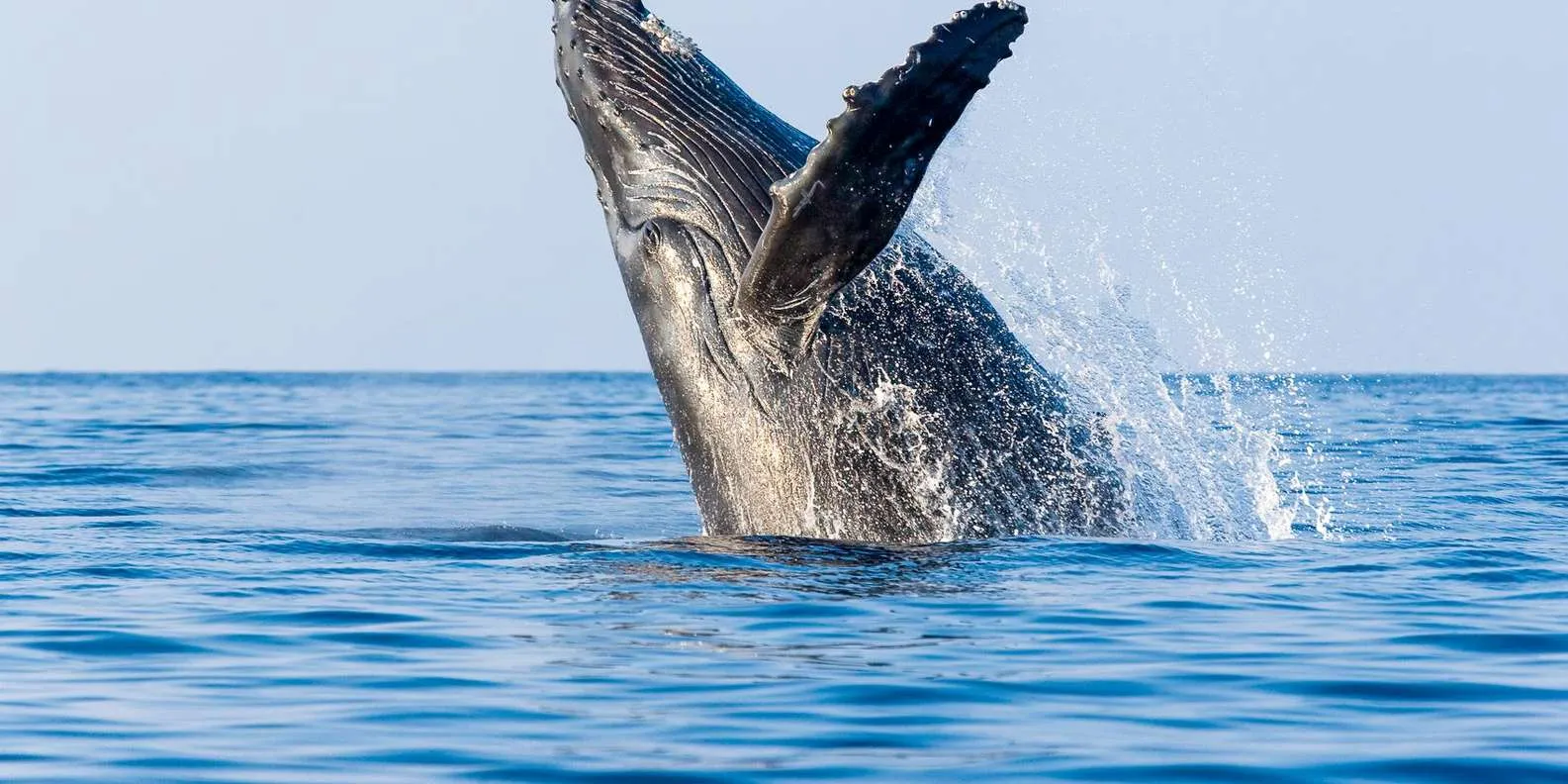
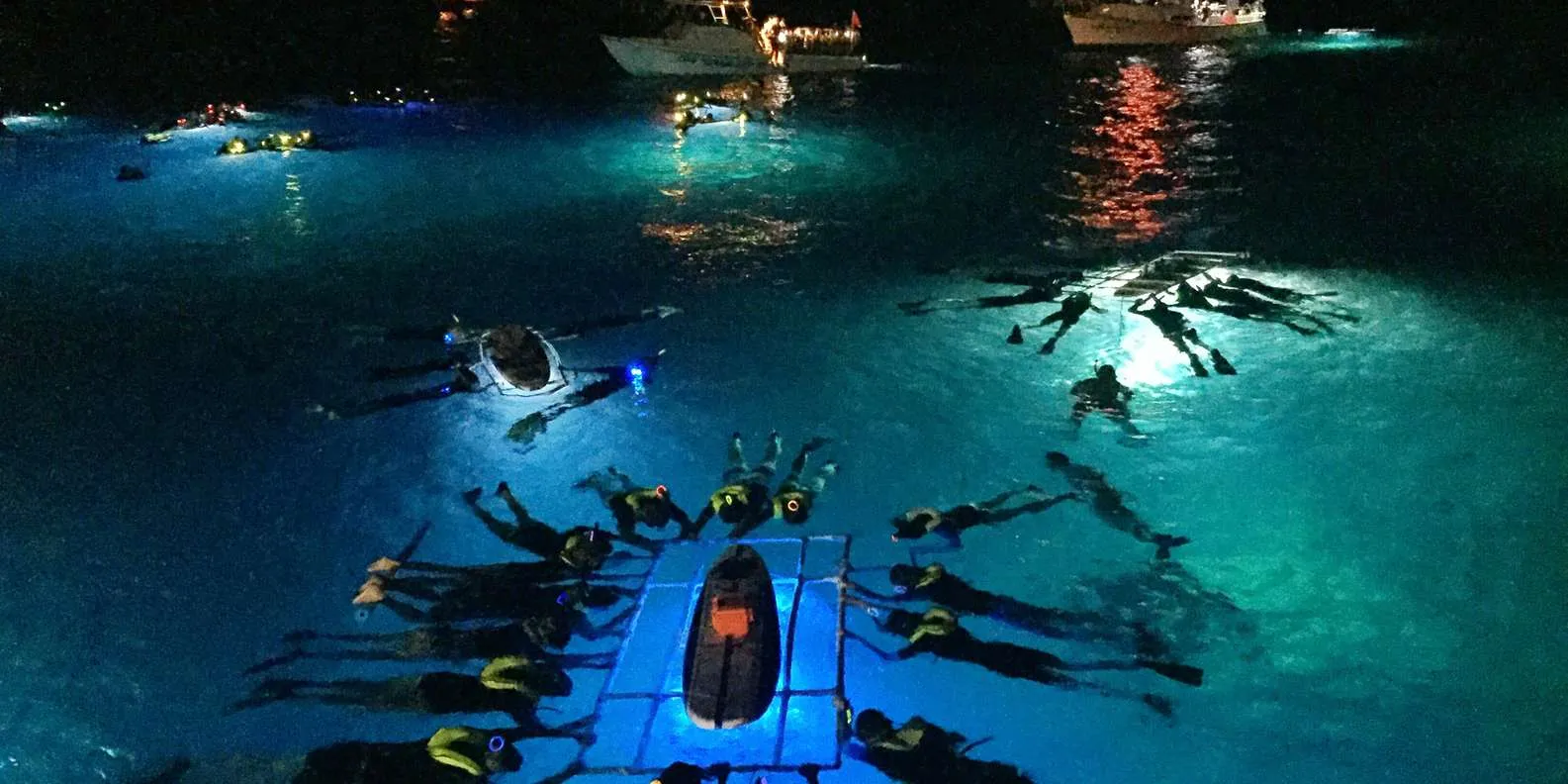
A winter day can include whales and mantas, with separate bookings
Whale watching and manta snorkeling make a useful winter pairing because they show different animals in different settings. The whale watch is a daytime cruise; the manta session takes place after dark. Choose the combination because you want both experiences, not because booking one improves your chances of seeing the other.
NOAA describes Hawaii’s humpback season as November–May, with peak abundance usually January–March. A particular tour’s operating window can be narrower. Hang Loose’s verified whale listing describes December to mid-April, so a November Hawaii trip does not automatically mean this exact excursion is available.
Compare the two parts of the itinerary
| Booking | Product | Published duration | Included experience |
|---|---|---|---|
| Daytime | Hang Loose whale watching, GYG 76840 | 2.5 hours | Whale search, hydrophone speaker, snacks and soft drinks |
| Nighttime | Hang Loose manta adventure, GYG 76846 | 2.5 hours | Boat ride and selected snorkel or ride-along option |
| Alternative night format | Sea Paradise, GYG 211359 | 2 hours | Keauhou catamaran and manta viewing; different harbor from the whale trip |
These are separate reservations. Having the same operator for the first two does not establish a package discount, a through-ticket, or a shared cancellation policy. Ask about an actual combined offer if that is what you want; do not assume the two calendar totals will be reduced later.
When to choose the pairing
January through March is a sensible period to consider when whale watching is a major reason for your Hawaii visit, using NOAA’s broad seasonal pattern. It is not a guarantee of a breach, a nearby whale or a manta encounter that evening. The manta population is resident; the whale population has a seasonal pattern. Sea conditions govern whether either outing can run on the day.
If your dates fall in November or May, check which whale excursions actually operate rather than relying on the wider seasonal description. If your dates fall outside whale season, book the manta experience on its own or consider a daytime reef snorkel as a different companion activity.
What whale watching adds
The verified Hang Loose cruise includes a hydrophone speaker to listen for whale sounds, along with snacks and drinks. Hearing depends on what is happening in the water; equipment on board does not promise an audible performance. Look at the sea with the crew and accept that the animals control the encounter.
NOAA’s sanctuary guidance prohibits approaches within 100 yards of a humpback whale. A worthwhile wildlife trip does not need the vessel to pursue the closest possible view. Respect the captain’s distance and instructions, and do not interpret a longer viewing distance as poor service.
Leave a real break between boats
Arrange the daytime trip so there is time for a return to shore, food, rest and travel to the evening check-in. Do not count the published duration as a guaranteed return timestamp. A same-operator choice may simplify the general geography, but the exact meeting instructions still matter.
Two cruises also mean two periods of exposure to ocean motion and weather. A passenger who enjoys one outing may not want another immediately afterward. Consider splitting the activities over two days, especially with children or when the evening snorkeling is the main priority.
For the manta trip, take a towel and a dry layer, and check wetsuit inclusions. Whale watching does not require you to enter the water, but the manta snorkeling option does. A family member who stays dry needs an explicitly offered observer ticket rather than an assumption based on the daytime cruise.
Keep cancellation expectations separate
Read each reservation’s cancellation deadline. If a whale cruise is canceled or sees no whales, that does not automatically change the manta booking. Likewise, a manta no-sighting return is a product-specific remedy and may be hard to use when you are leaving the next morning.
The practical strategy is to book the manta outing early in your stay and avoid filling every remaining evening. Read the winter manta guide for weather-related planning and guarantees explained for the difference between a return offer and a refund.
Sources
NOAA sanctuary boating and whale-season guidance. Product descriptions checked 26 October 2026 on GetYourGuide; links to the individual products appear above.
Continue Planning
Compare Kona manta tours, check departure locations or browse all planning guides.